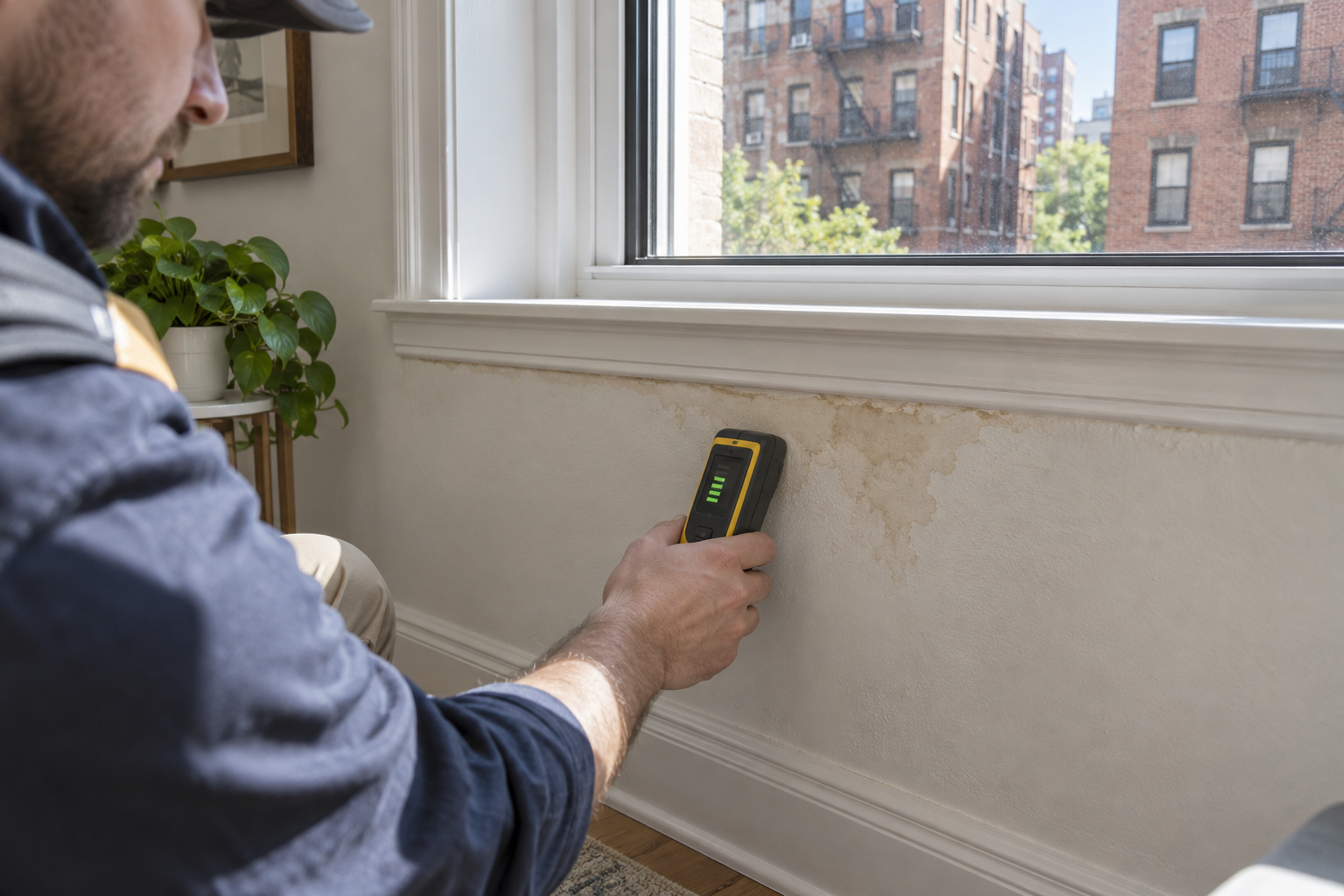
Hidden moisture can be easy to miss during a quick apartment showing or open house. A freshly painted ceiling, a finished basement, or a cabinet full of cleaning supplies may distract from clues that deserve a closer look. For NYC buyers, asking the right questions before closing can help separate a cosmetic mark from an unresolved water problem.
A home inspection provides an opportunity to review accessible areas and document concerns. Here are seven signs worth discussing with your inspector, along with practical steps for following up.
1. Stains that return after painting
Brown rings on ceilings, streaks beneath windows, and discoloration around a bathroom can indicate a history of water exposure. A stain alone does not establish whether a leak is active. Ask when it first appeared, what repair was completed, and whether the area has been checked since then. Photos and repair records are more useful than a verbal assurance that everything is fine.
2. Peeling paint or swollen trim
Bubbling finishes, lifted flooring, and expanded baseboards deserve attention, especially near plumbing fixtures or exterior walls. These changes can have different causes, so avoid diagnosing the problem from appearance alone. Point out the location during the inspection and ask whether further investigation is recommended before you commit to cosmetic repairs.
3. Musty odors in enclosed spaces
Notice how a basement, closet, or lower-level room smells when you first enter. An odor is a clue, not a mold diagnosis. Tell your inspector where you noticed it and whether windows were open or strong fragrances were present during your visit. Routine home inspections are not a substitute for a separately arranged mold assessment when one is appropriate.
4. Condensation around windows
Repeated moisture on glass or damp window sills can prompt questions about ventilation, indoor humidity, and the window assembly. Note which rooms are affected and whether it happens seasonally. The EPA’s moisture guidance emphasizes controlling water sources and humidity rather than simply covering damage with paint.
5. Dampness beneath sinks
Ask for accessible sink cabinets to be cleared before inspection day. A crowded cabinet can conceal damaged shelving, stains, or moisture around connections. Recent cabinet liners or a container positioned beneath a pipe are reasons to ask questions, not proof of wrongdoing. Have the inspector document what is visible and explain any access limitation.
6. Basement marks and water history
Water marks along lower walls, damaged stored boxes, and recurring dampness warrant a conversation about past rain events and repairs. Ask whether water entered through the exterior, plumbing, or another route and request supporting records. For related structural concerns, read our foundation inspection guide. Moisture and foundation questions sometimes require different specialists.
7. Repeated repairs without a clear explanation
Multiple patches in the same area can be more informative than one isolated blemish. Ask the seller for a timeline, invoices, and any follow-up observations. In a condo or co-op, include building management in questions about shared piping, exterior walls, and work outside the unit. Confirm who will arrange access and who is responsible for repairs rather than assuming every issue belongs to the apartment owner.
What an inspection can tell you about hidden moisture
The inspection report should distinguish observations from conclusions and identify areas that could not be examined. Depending on the agreed service, an inspector may use a moisture meter or thermal camera to investigate a concern. These tools do not see through walls or guarantee that concealed spaces are dry. A dry reading on inspection day also cannot rule out an intermittent leak.
Plan your next steps before closing
For each concern, ask what is known, what remains uncertain, and which professional should evaluate it. Obtain written repair proposals when needed, and discuss your transaction deadlines with your real estate team. Address the source of water before replacing damaged finishes.
Inspextro can help you understand the visible condition of a property and the questions raised by the inspection. Visit Inspextro to discuss a home inspection and confirm the scope for your NYC property.