
Roof inspections help NYC homeowners understand the condition of one of the most important parts of a property before small problems become expensive repairs. In New York City, roofs deal with heavy rain, wind, snow, heat, drainage issues, and nearby buildings that can make wear harder to notice from the ground.
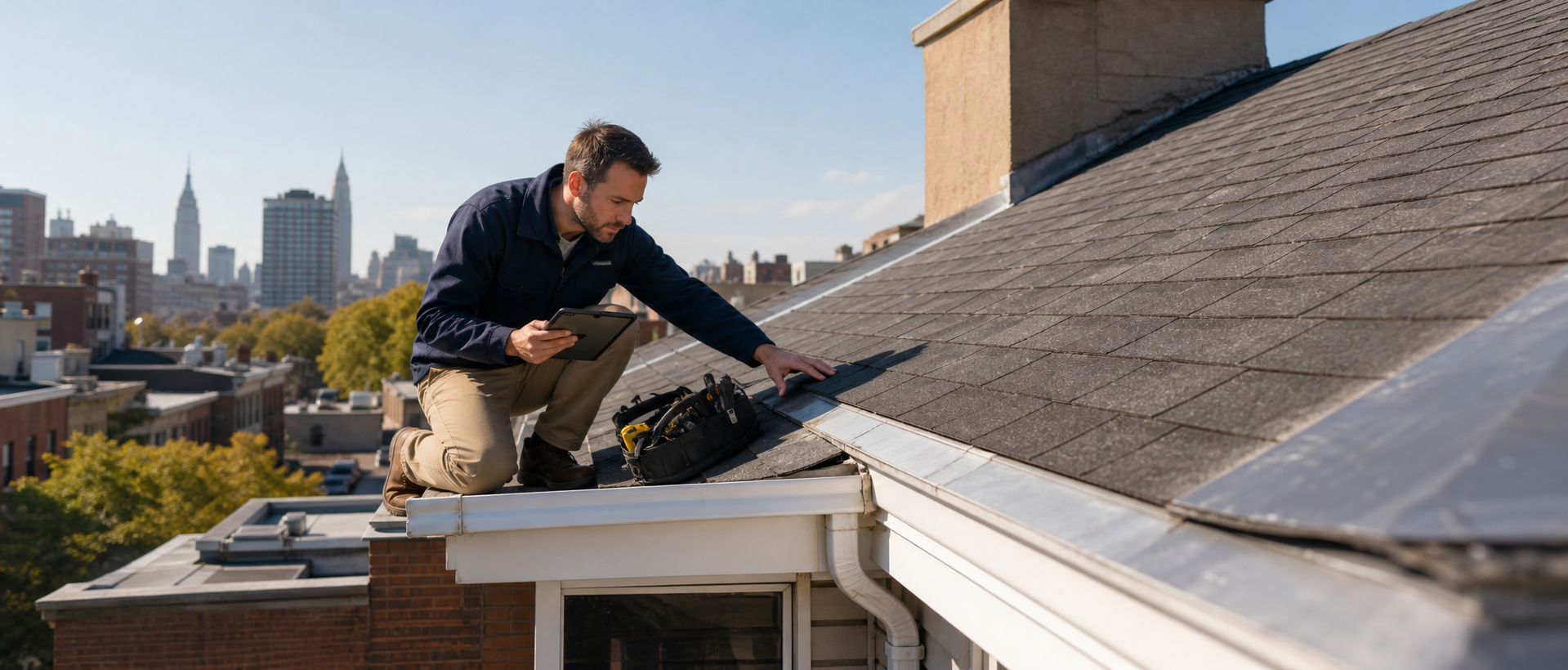
A professional roof inspection looks at visible materials, drainage, flashing, penetrations, and signs of active or past leaks. For buyers, this can help reveal repair needs before closing. For sellers, it can reduce surprises during negotiations. For current homeowners, it can help plan maintenance before damage spreads into ceilings, walls, insulation, or electrical areas.
What a roof inspection usually includes
During a roof inspection, the inspector checks the roof surface for missing, loose, cracked, or curling shingles. On flat or low-slope roofs, the inspection may focus on membrane condition, ponding water, seams, patches, drains, scuppers, and edge details. The inspector also looks at flashing around chimneys, vents, skylights, parapet walls, and roof transitions because these areas are common leak points.
Gutters and drainage are also important. Water that cannot move away from the roof can shorten the life of roofing materials and increase the chance of leaks. In NYC homes and small buildings, blocked gutters, poor slope, damaged downspouts, and old repairs are common findings.
Why roof inspections matter before buying
A roof can look fine from the street but still have hidden concerns. Buyers should understand whether the roof appears recently maintained, near the end of its service life, or showing signs that further evaluation by a roofing contractor may be needed. The inspection report can help buyers ask better questions, budget more accurately, and avoid assuming that a roof is in good shape just because there are no visible stains inside.
A home inspection is visual and non-invasive, so it does not guarantee that every hidden leak will be discovered. Still, roof inspections often identify clues that deserve attention, such as soft areas, staining, damaged flashing, poor drainage, or signs of repeated patching.
Warning signs homeowners should not ignore
Common warning signs include ceiling stains, peeling paint near exterior walls, musty odors in attic or top-floor areas, missing shingles, granules collecting in gutters, sagging sections, standing water, and cracks around roof penetrations. Even small stains can matter because water may travel before it becomes visible inside the home.
If a roof has multiple warning signs, it may be smart to schedule repairs or request a specialist evaluation. Catching issues early can protect interior finishes and help prevent mold, insulation damage, and structural concerns.
How often should a roof be checked?
Homeowners should consider a roof inspection after major storms, before listing a property, before buying a home, and as part of regular maintenance. Older roofs may need closer attention, especially if past repairs are visible or if drainage is poor.
What the inspection report can help you do
After the roof inspection, the report should explain visible findings in plain language and include photos when conditions are accessible. Homeowners can use that information to prioritize maintenance, ask a roofing contractor for repair pricing, or keep records for future buyers. Buyers can use the findings to better understand risk before moving forward. Sellers can use the information to make practical repairs before the home is shown.
The bottom line
Roof inspections give NYC homeowners practical information. They do not replace a licensed roofing contractor when repair design or cost estimates are needed, but they help identify visible concerns and guide the next step. A clear inspection report can make a real estate decision less stressful and help protect the property long term.