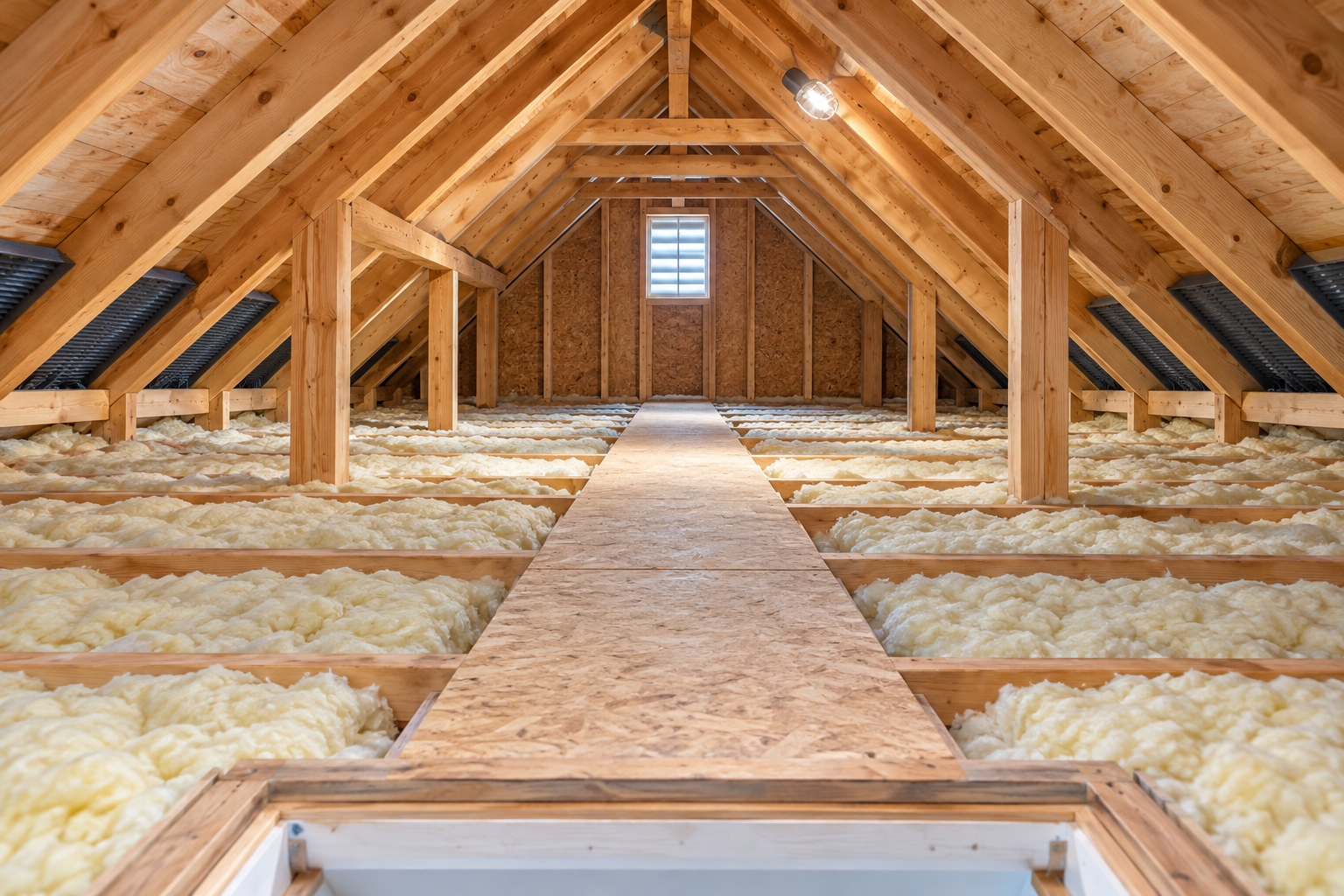
An attic ventilation inspection can raise questions that a polished living room never reveals. For NYC buyers considering a house with an accessible attic, the space above the ceiling can offer clues about moisture, insulation, and previous work. The useful starting point is understanding the roof assembly and the inspection’s scope, rather than assuming every attic needs the same fix.
Here are five questions to discuss before and after the visit. They can help you arrange access, understand the report, and choose the right follow-up professional when a concern remains unresolved.
1. Is this a vented or unvented attic?
Ask what type of assembly is present before discussing changes. A conventional vented attic and an intentionally unvented roof assembly manage heat and moisture differently. Missing visible vents do not, by themselves, establish that a roof was built incorrectly. The Building America Solution Center’s guide explains this distinction. A contractor should evaluate proposed modifications in the context of the existing design.
2. What can be seen during the attic ventilation inspection?
Ask the inspector to identify the areas observed and explain any access limits. Low clearance, stored belongings, unsafe walking surfaces, or a sealed hatch may prevent entry or limit views. Arrange access in advance with the seller, but do not climb into the attic or disturb materials yourself. An inaccessible area is an unanswered inspection question, not confirmation that its condition is satisfactory.
Request clear descriptions of where photographs were taken. An observation near the hatch may not represent the far end of the attic. This detail helps a contractor understand the report and decide whether additional access is necessary for an evaluation.
3. Are there signs of moisture or past repairs?
Stains, damaged finishes below the attic, or visible deterioration deserve a documented explanation. A mark may relate to an old event, an active leak, condensation, or another condition. Ask about previous roof repairs and whether the area has been observed since the work. The inspector should distinguish what was seen from conclusions that require further investigation.
Our hidden moisture guide offers related questions for buyers. Avoid treating a single dry visit as proof that an intermittent problem has been resolved.
4. Where do bathroom and kitchen exhaust ducts end?
Ask whether accessible exhaust routes can be followed and where they terminate. The Department of Energy’s Consumer Guide to Durable Attics warns against directing moist household exhaust into an attic. If an apparent disconnected duct or unclear termination is reported, have a qualified contractor evaluate it rather than assuming a nearby roof vent serves the duct.
Document what could not be traced as well as what could. An obscured route may need a separate evaluation, and an inspection should not promise that every concealed section has been verified.
5. How do insulation and ventilation work together?
In a vented attic, insulation, air sealing, and ventilation need to be considered together. ENERGY STAR’s attic guidance explains why insulation should not block the intended ventilation pathway. That does not mean adding more vents or a powered fan is automatically the right repair for every property.
Before arranging upgrades, ask a qualified professional to assess the assembly, the reported concerns, and any related exhaust or air-leakage issues. Request a written scope so the proposed work addresses a defined condition rather than a vague promise of improved performance.
Turn attic observations into an action list
Sort the report into documented defects, access limitations, and questions needing specialist review. Ask who should evaluate each concern and what information that professional needs. Buyers can then discuss timing and completed repair documentation with their real estate team.
An attic review is part of understanding the property, but it cannot guarantee concealed conditions or predict future leaks. Keep the inspection photographs and any contractor findings together, especially when work affects more than one part of the roof assembly.
To confirm access requirements and your inspection scope, visit Inspextro’s scheduling page. Ask whether an attic ventilation inspection can be included for your NYC property.