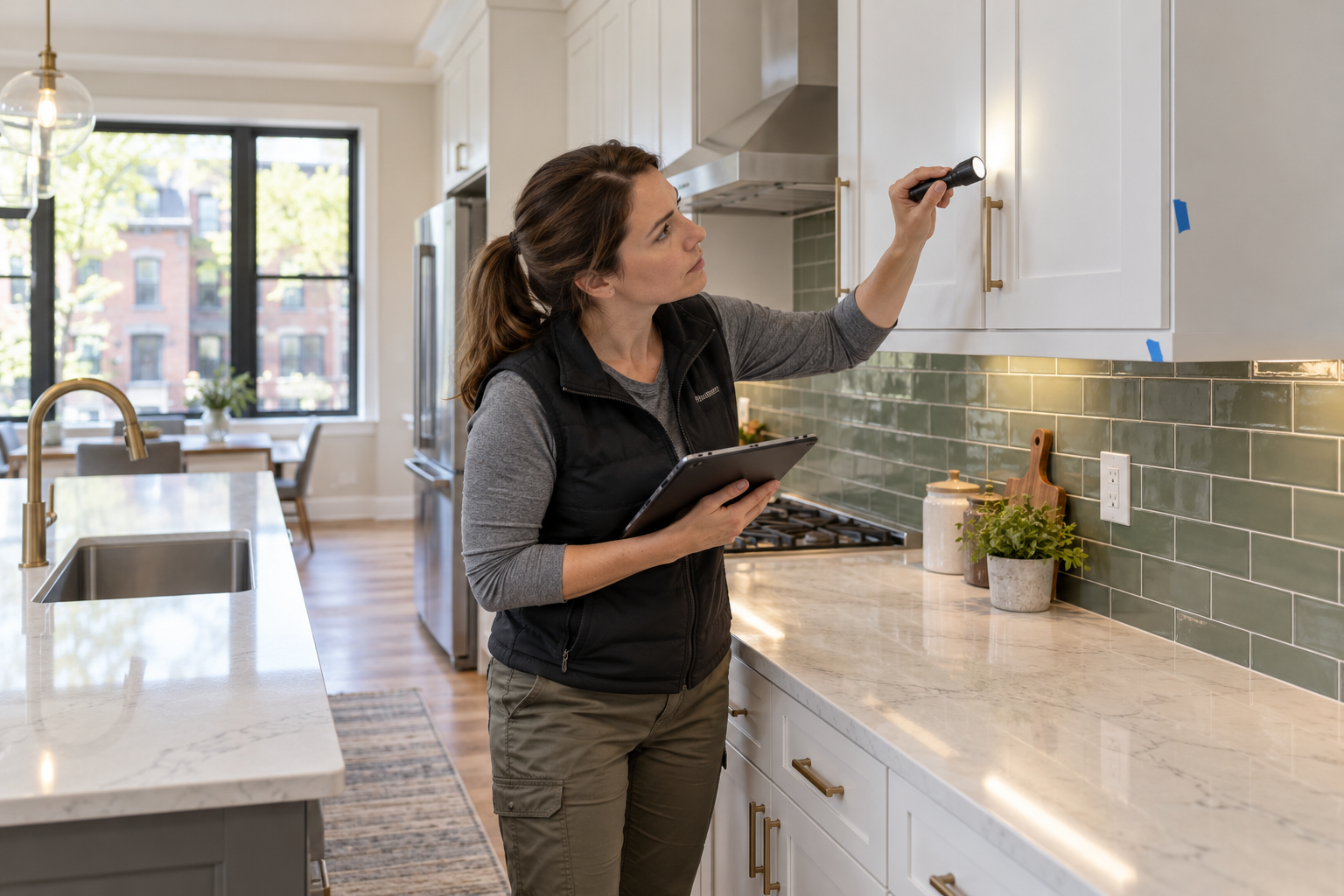
A new construction home inspection gives NYC buyers an independent look at accessible conditions in a newly built property. New finishes can look impressive while leaving practical questions about operation, access, unfinished work, and repair follow-up. The most useful approach is to plan the inspection early enough to understand its findings and organize a clear response.
Use these six steps to prepare. They focus on communication and documentation, so you can make the inspection report useful without treating it as a warranty, a construction approval, or a promise that every concealed detail has been checked.
1. Confirm timing and the inspection scope
Ask your inspector which services are appropriate for the property’s current stage and what can be reviewed. A completed-home inspection differs from a separately arranged review before finishes conceal construction. Do not assume one visit covers every phase. Coordinate the proposed timing with the builder and your real estate team, allowing room for follow-up questions before relevant deadlines.
2. Arrange access with the builder
Confirm the appointment, permitted access, and an appropriate site contact. Ask whether the property will be ready for inspection, including safe access to the areas and equipment within scope. If systems are incomplete or cannot be operated, the report should explain that limitation. A return visit may be needed; decide how it will be arranged rather than assuming it is included automatically.
Share any access instructions with the inspector ahead of time. This is particularly useful in a new condo development where a unit visit may require coordination with management or a builder representative.
3. Separate appearance from operation
Bring your own observations about finishes, doors, cabinetry, fixtures, and other items, but ask the inspector to explain the significance of each reported condition. A cosmetic concern and a safety-related defect require different responses. Avoid dismissing a concern simply because a component is new, and avoid assuming every small finish blemish establishes a larger construction problem.
Record where an issue occurs and what was observed. A precise location and clear photograph give the builder a much better starting point than a general statement that something feels wrong.
4. Understand the new construction home inspection report
Ask the inspector to distinguish observed defects, incomplete components, and inaccessible areas. A general inspection reviews accessible conditions at the time of the visit; it does not reveal every hidden issue. The InterNACHI Standards of Practice explain the non-invasive nature and limitations of this type of inspection.
Required governmental approvals and the builder’s own checks serve different purposes from your independent inspection. Ask the appropriate professionals about approvals and contract questions rather than assuming the home inspector is certifying either one.
5. Request a clear written builder response
Organize concerns by location and report reference, then ask for a written response describing the proposed action. Keep track of who is responsible, what remains unresolved, and whether the response addresses the original observation. A short tracking list can be helpful: item, location, response, completion record, and follow-up needed.
Ask your real estate team how to handle timing and agreements. The inspection report provides observations; decisions about contractual obligations or closing arrangements need advice from the professionals handling your transaction.
6. Plan follow-up and the final walkthrough
When work is reported complete, request supporting documentation and determine whether a specialist or your inspector should review it. A final walkthrough gives you another opportunity to notice changes and outstanding items, but it does not automatically replace a professional reinspection. Confirm the purpose and limits of any follow-up visit before scheduling it.
In a condo, ask which concerns involve the unit and which relate to shared areas or equipment. Our NYC condo inspection guide explains why access and responsibility questions matter even when a building is new.
Keep the records after moving in
Save the inspection report, builder responses, equipment manuals, and completed repair documents together. These records can help you explain a recurring concern later without reconstructing the timeline from memory. Ask the builder to explain its service process and any applicable documentation requirements directly.
Visit Inspextro’s scheduling page to discuss a new construction home inspection for your NYC property. Confirm the service, construction stage, and access arrangements before booking.