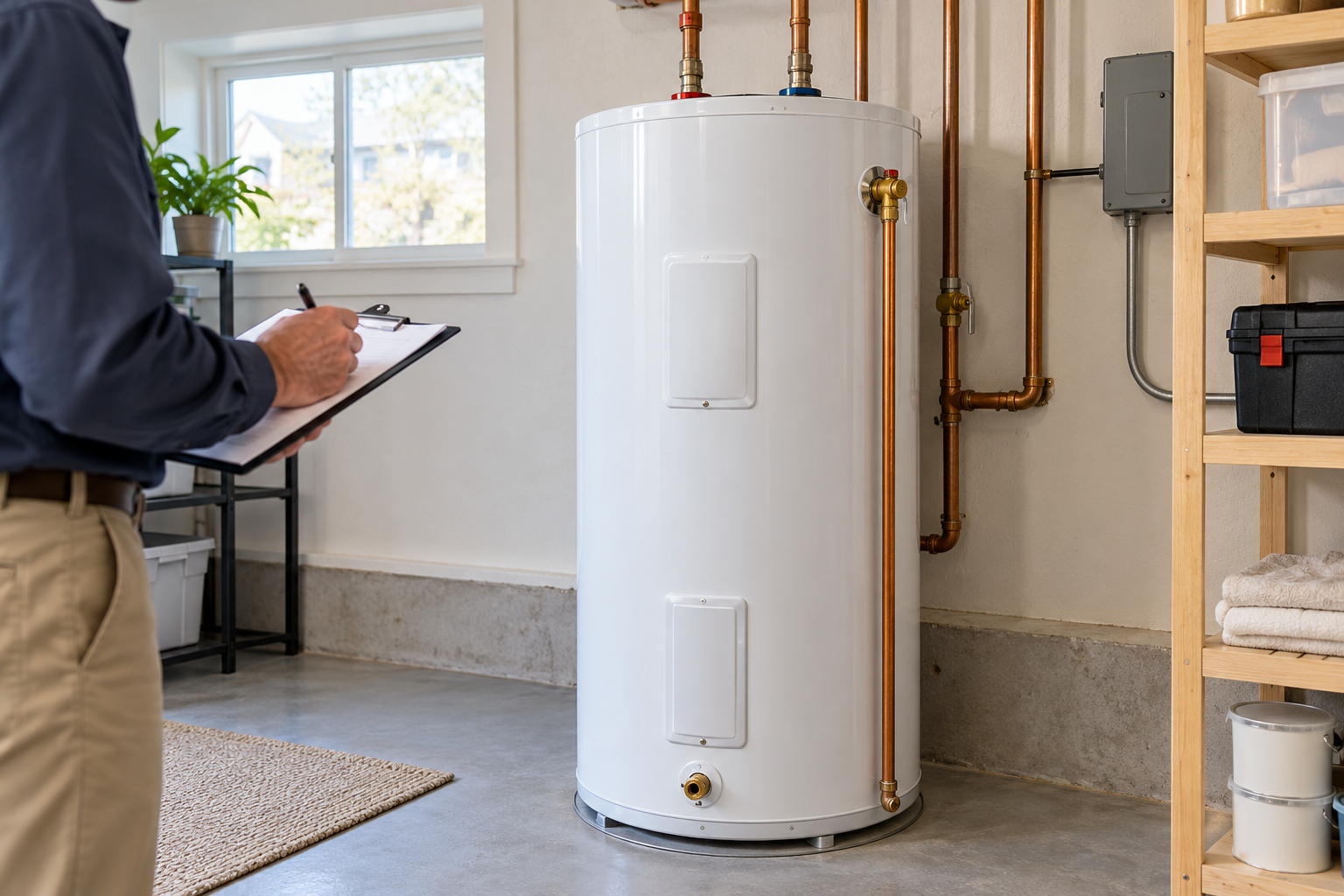
A water heater inspection gives NYC buyers a chance to ask useful questions about equipment that is easy to overlook during a showing. A clean utility room or a recently renovated bathroom does not tell you how the hot-water system has been maintained. Before closing, review the visible condition, available records, and any recommendation for further evaluation.
Start with these six questions. The goal is a documented understanding of what serves the property and what needs attention, rather than an assumption that hot water at one faucet proves everything is in order.
1. Which equipment supplies the hot water?
Ask where the water heater is located and which areas it serves. A property may use a storage tank, tankless equipment, or a combined heating and hot-water arrangement. In a condo or co-op, hot water may come from building equipment outside the unit. Ask the inspector to describe what was accessible and included, and request management records for shared equipment where appropriate.
2. Is there a history of leaks or repairs?
Look for an explanation of visible staining, corrosion, or moisture around the equipment and nearby piping. These observations do not always establish the source or timing of a leak. Ask the seller for a repair timeline and invoices, and share any recurring problem with the inspector. If water is present, the next step is identifying and correcting its source rather than simply cleaning the floor.
3. What does the water heater inspection include?
Confirm the scope before the visit. A general inspection may review accessible water-heating equipment, its energy source, visible venting where applicable, and safety-related components. It is not a teardown, maintenance service, or guarantee of future performance. The InterNACHI Standards of Practice provide an example of the components and limitations involved in a general inspection.
Ask your inspector to explain any recommendation involving a relief valve or discharge piping. Leave testing, adjustments, and repairs to an appropriately qualified professional; these components should not be casually operated during a buyer’s walkthrough.
4. Are installation and service records available?
Request the equipment manual, available installation invoice, and recent service documentation. A model label may help a professional identify the equipment, but age alone does not establish its condition or exact replacement date. Ask whether any recommended work remains outstanding and whether records describe the issue clearly enough for the next service provider to follow up.
The EPA’s home-maintenance guidance directs homeowners to their water heater manual and appropriate maintenance information. Different equipment requires different care, so avoid applying generic instructions without checking the specific system.
5. Can the equipment be accessed safely?
Arrange access with the seller or building manager ahead of inspection day. Stored belongings, locked rooms, or permanent finishes can limit the review. Ask for the surrounding area to be cleared without touching electrical or fuel connections. If equipment cannot be examined, have that limitation documented and discuss whether another visit or specialist evaluation is needed before your transaction deadlines.
6. Who is responsible for follow-up?
Clarify who will obtain an evaluation, authorize repairs, and keep the records. In shared buildings, do not assume the unit owner controls the hot-water equipment. Ask management how service is handled and which documentation can be provided. Our NYC condo inspection guide covers more questions about access and shared responsibilities.
Use the findings to plan your next step
Separate an observed defect from an unanswered question or a routine maintenance item. When the report recommends a plumber or other qualified contractor, request a written evaluation and an explanation of the proposed work. Keep completed repair documentation with the inspection report so there is a clear record of what was addressed.
Ask about your household’s hot-water needs if capacity is a concern. A brief visual inspection does not establish whether equipment will meet every future pattern of use, and a contractor may need to assess that question separately.
Visit Inspextro’s scheduling page to discuss your NYC home inspection and confirm the water heater inspection scope before booking.